
 Australian Dollars
Power bank travel guide
Quick Guide for Australian Travellers
Yes, many power banks can be taken on a plane, but they should usually be packed in carry-on baggage, not checked luggage. The key number to check is the watt-hour rating, shown as Wh.
This guide explains the common 100Wh airline limit, how to check power bank capacity, what to avoid, and which Laser power banks are suitable for different travel needs.
Quick answer
Power banks under 100Wh are commonly accepted by many airlines in carry-on baggage without special capacity approval. Power banks must not be packed in checked luggage.
Important: Being under 100Wh does not guarantee acceptance on every flight. Airlines can still limit the number carried, require clear battery labelling, specify where the power bank must be stored and prohibit onboard use or recharging. Power banks over 100Wh and up to 160Wh require airline approval.
Airline rules can vary by airline, destination, route and airport security screening process. Always check your airline’s latest battery and power bank policy before travelling.
Why airlines care about Wh, not just mAh
Power banks are often marketed using mAh, such as 5,000mAh, 10,000mAh, 20,000mAh or 30,000mAh. Airlines usually focus on Wh because watt-hours measure the actual energy stored in the battery.
The simple formula is:
The Wh rating is model-design dependent because manufacturers calculate it using the battery voltage or reference voltage for that model. For flights, always use the Wh rating shown on the product label, packaging or official product specifications.
Do not rely on mAh alone or assume that all power banks with the same mAh capacity have the same Wh rating. A calculation can help you understand the capacity, but airlines or airport security may still reject a power bank that is not clearly labelled.
A clearly printed Wh rating makes it easier for travellers, airline staff and airport security teams to confirm whether a power bank sits within common airline limits.
Carry-on or checked luggage?
Power banks should generally be carried in your cabin bag or hand luggage. They should not usually be packed in checked luggage because cabin crew can respond more quickly if a battery overheats, is damaged or shows signs of failure.
Keep your power bank accessible during the flight, protect it from damage, and avoid loose contact with metal items such as keys, coins or other objects that may cause a short circuit.
Where practical, keep power banks in their original packaging, an insulated pouch or a protected carry case. For high-capacity units, cover or protect exposed ports and terminals to reduce the risk of accidental short circuiting.
Do not travel with a power bank that is swollen, leaking, damaged, recalled, counterfeit or missing clear battery labelling.
Common airline power bank limits
The table below reflects the common Australian passenger-baggage thresholds published by the Civil Aviation Safety Authority. Individual airlines can apply additional quantity, storage, use and approval requirements.
| Wh rating | Common treatment | What this means for travellers |
|---|---|---|
| Under 100Wh | Generally carried in cabin baggage without special capacity approval | Airline quantity, labelling, condition, storage and onboard-use rules still apply |
| Over 100Wh and up to 160Wh | Airline approval is required | Obtain approval before travel and follow the airline’s declaration and packing instructions |
| Over 160Wh | Prohibited in passenger baggage, except limited mobility-aid cases | Do not treat it as a standard passenger travel power bank |
Australian airline power bank rules at a glance
These rules can change. Check the official airline page again before every trip.
Last checked: 17 June 2026
| Guidance | Quantity | Use or recharge onboard | Storage | Over 100Wh up to 160Wh |
|---|---|---|---|---|
| CASA | Airlines may set limits, so check with your carrier | Follow the airline’s rules | Cabin baggage only and protected from damage or short circuit | Airline approval required |
| Qantas | Maximum two power banks per passenger | Use and recharging are prohibited | Carry-on only and within reach, such as the seat pocket, under the seat or a nearby overhead locker if needed | Approval required and batteries must be declared during check-in |
| Jetstar Australia | Maximum two power banks per passenger | Use and recharging are prohibited | Carry-on only and kept within easy reach | Approval required through the Qantas dangerous-goods process for JQ flights |
| Virgin Australia | Maximum two power banks per passenger | Use and recharging are prohibited | Carry-on only, preferably in the seat pocket, under the seat or kept with you | Prior approval and declaration at check-in required |
Which Laser power bank is right for travel?
Laser offers compact phone power banks, everyday LiFePO4 power banks, laptop-ready power banks and larger off-grid models. For flying, the most important detail is the exact Wh rating printed for the model.
These products are not described as universally airline-approved. Their travel relevance is based on their stated Wh rating and common aviation thresholds. The airline and airport security team retain the final decision.

5,000mAh ChargeCore LiFePO4
Shown: PB-5KLFSU-041
Capacity: 16Wh
Best for pocket backup, short trips and one-day phone top-ups.
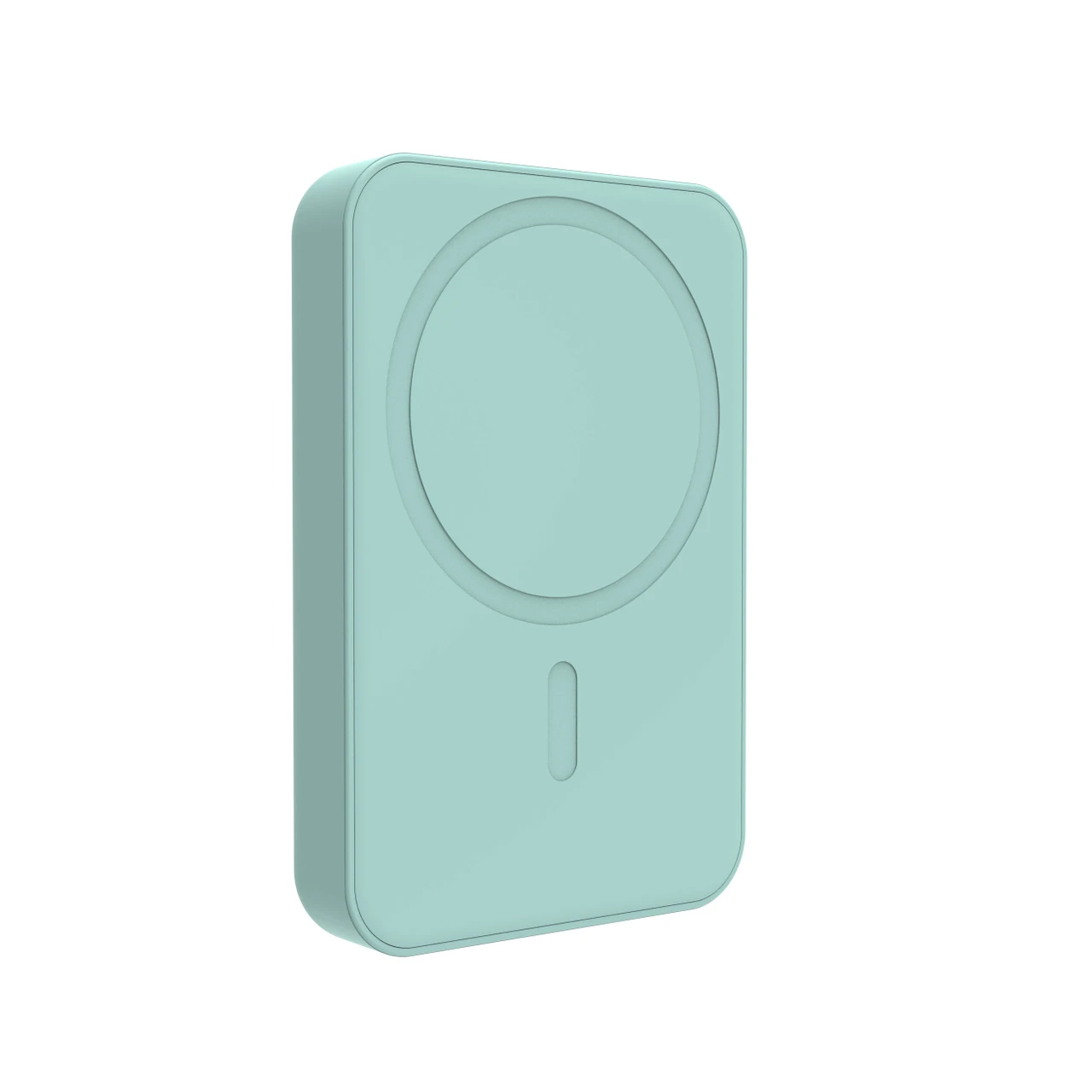
5,000mAh Magnetic Power Bank
Shown: PB-MS5KAQ-458
Capacity: 18.5Wh
Best for magnetic wireless phone charging and quick top-ups.

10,000mAh ChargeCore LiFePO4
Shown: PB-10LFWT-990
Capacity: 32Wh
Best for everyday travel, commuting and weekend trips.

20,000mAh ChargeCore LiFePO4
Shown: PB-20LFBK-003
Capacity: 64Wh
Best for longer travel days, tablets and multiple devices.

20,000mAh 100W Laptop Power Bank
Shown: PB-PD100W-491
Capacity: 73Wh
Best for USB-C laptops, tablets and higher-output charging.

30,000mAh LiFePO4 45W Power Bank
Shown: PB-LP30BK-608
Capacity: 96Wh
A high-capacity option with a stated 96Wh rating. Carry it in cabin baggage and check your airline’s current rules.

62,000mAh LiFePO4 Power Bank with Lantern
Shown: PB-62LFBK-571
Capacity: 198.4Wh
Important: Not a standard airline carry-on power bank. Better for camping and off-grid use.
Laser power bank travel comparison
| Product type | Shown SKU | Wh rating | Best for | Flight travel note |
|---|---|---|---|---|
| 5K ChargeCore LiFePO4 | PB-5KLFSU-041 | 16Wh | Compact phone backup | Well below the common 100Wh threshold |
| 5K magnetic wireless power bank | PB-MS5KAQ-458 | 18.5Wh | Magnetic wireless phone charging | Well below the common 100Wh threshold |
| 10K ChargeCore LiFePO4 | PB-10LFWT-990 | 32Wh | Everyday travel and commuting | Below the common 100Wh threshold |
| 20K LiFePO4 power banks | PB-LP20BK-585 or PB-20LFBK-003 | 64Wh | Longer days, tablets and multiple devices | Below the common 100Wh threshold |
| 20K 100W laptop power bank | PB-PD100W-491 | 73Wh | USB-C laptops and tablets | Below the common 100Wh threshold |
| 30K LiFePO4 45W power bank | PB-LP30BK-608 | 96Wh | High-capacity charging under common 100Wh guidance | Carry-on only, keep accessible and check airline rules before travel |
| 62K LiFePO4 power bank with lantern | PB-62LFBK-571 | 198.4Wh | Camping, backup lighting and off-grid use | Not suitable as a standard passenger airline carry-on power bank |
Can you use a power bank during a flight?
This depends on the airline. As of the last review of this guide, Qantas, Jetstar Australia and Virgin Australia prohibit passengers from using a power bank to charge another device during the flight and also prohibit recharging the power bank using aircraft power.
Charge your devices before boarding, disconnect cables when the power bank is not in use, keep the unit accessible and follow crew instructions. Check the airline’s latest policy before every trip because onboard-use rules can change.
Are LiFePO4 power banks better for travel?
LiFePO4 is generally considered more thermally stable than several common lithium-ion chemistries. Several Laser ChargeCore models use LiFePO4 chemistry for portable power.
More thermally stable does not mean risk-free, fireproof or exempt from airline rules. Damage, defects, overheating and short circuits can still create hazards. For air travel, the printed Wh rating, battery condition, clear labelling and the airline’s current rules remain the deciding factors.
Official airline battery guidance
Airline and airport security rules can change. Before flying, check your airline’s latest battery and power bank policy directly. The links below are provided for convenience and do not replace airline approval where required.
Power bank travel checklist
- Check the printed Wh rating before travelling.
- Do not assume that mAh alone determines whether the power bank is permitted.
- Check your airline’s battery and power bank rules before flying.
- Check quantity limits. Qantas, Jetstar Australia and Virgin Australia currently limit passengers to two power banks.
- Carry power banks in hand luggage or cabin baggage only.
- Keep power banks accessible during the flight and follow the airline’s storage instructions.
- Never pack a power bank in checked luggage.
- Protect the unit from damage and accidental short circuits.
- Keep it in the original packaging, a separate pouch or a protected case where practical.
- Protect exposed terminals and ports where required.
- Do not travel with swollen, damaged, leaking, recalled, counterfeit or unlabelled batteries.
- Disconnect charging cables when the power bank is not in use.
- Do not rely on marketing claims such as “airline friendly”, “flight approved” or “travel safe” without checking the specifications and airline rules.
- Check whether onboard use and recharging are prohibited.
- For international travel, also check destination, transit and operating-airline requirements.
Still unsure which power bank to choose?
Your airline and airport security teams always have the final say on what can be carried onboard. If you need help checking a Laser power bank’s Wh rating, charging features or best-fit use case, our team can help you understand the product details before you travel.
Visit the Laser support centre or contact us through live chat on our website.
Frequently asked questions
Can I take a power bank on a plane in Australia?
Yes, many power banks can be taken on a plane in Australia if they meet the airline’s battery limits and are carried in cabin baggage. Quantity, labelling, condition, storage and onboard-use rules can still apply. Check the operating airline before travelling.
Can I put a power bank in checked luggage?
No. Spare batteries and power banks should be carried in cabin baggage only, where they remain accessible if they overheat or show signs of failure.
What is the 100Wh power bank limit?
The 100Wh limit is a common aviation threshold. Power banks under 100Wh can generally be carried in cabin baggage without special capacity approval, but this is not blanket airline approval. Power banks over 100Wh and up to 160Wh require airline approval, while units over 160Wh are generally prohibited in passenger baggage.
Does under 100Wh mean a power bank is airline-approved?
No. Under 100Wh generally means special capacity approval is not required, but the airline can still set quantity, labelling, storage, condition and onboard-use requirements. Final acceptance rests with the airline and airport security.
How many power banks can I take on a flight?
The limit depends on the airline. Qantas, Jetstar Australia and Virgin Australia currently allow a maximum of two power banks per passenger. Check the rules for every operating airline on your itinerary.
Can I take a 20,000mAh power bank on a plane?
Often, yes, but check the printed Wh rating rather than relying on mAh alone. Selected Laser 20,000mAh models are rated at 64Wh or 73Wh, below the common 100Wh threshold. Airline quantity, labelling, storage and onboard-use rules still apply.
Can I take a 30,000mAh power bank on a plane?
It depends on the exact model and its printed Wh rating. A 30,000mAh power bank may be above or below 100Wh depending on its rated voltage and design. Do not assume the Wh rating from mAh or battery chemistry alone. The Laser PB-LP30BK-608 is specifically rated at 96Wh, but it must still be carried in cabin baggage and checked against the airline’s current rules.
Can I take the Laser 62,000mAh power bank on a plane?
No, not as standard passenger baggage. The Laser 62,000mAh LiFePO4 power bank with magnetic lantern is rated at 198.4Wh, above the 160Wh passenger-baggage limit, and is better suited to camping, emergency backup and off-grid use.
Can I use a power bank during a flight?
It depends on the airline. Qantas, Jetstar Australia and Virgin Australia currently prohibit using power banks to charge devices onboard and prohibit recharging power banks from aircraft power. Check your operating airline before travel.
Are LiFePO4 power banks exempt from airline rules?
No. LiFePO4 chemistry may offer greater thermal stability than several common lithium-ion chemistries, but it is not risk-free, fireproof or exempt from airline rules. The printed Wh rating, condition, labelling and airline policy still determine how the power bank may be carried.
Are magnetic wireless power banks allowed on planes?
Magnetic wireless power banks are generally treated like other power banks. The Wh rating, battery condition, quantity and airline policy matter more than whether the unit supports magnetic wireless charging.
Which Laser power bank should I consider for travel?
For light travel, a 5,000mAh or 10,000mAh Laser power bank is compact. For laptops and longer travel days, selected 20,000mAh models may be useful. The Laser PB-LP30BK-608 is a higher-capacity option with a stated 96Wh rating. No product should be treated as universally airline-approved, so check the operating airline before travel.
Do airline power bank rules change?
Yes. Airlines and airport security authorities can update battery rules, especially around quantity, labelling, storage and onboard use. Check the official airline policy before every trip.
Shop Laser power banks
Explore Laser power banks for phones, tablets, laptops, commuting, travel, camping and everyday backup power. Choose the right model based on capacity, Wh rating, charging speed, size and your airline’s current travel rules.
Last reviewed: 17 June 2026. This guide is general information only and does not replace airline approval, airport security screening or official airline policy. Airline rules can change, so always check the operating airline before travelling.